Telefónica

Telefónica Deutschland is one of the leading integrated telecommunications providers in Germany, serving more than 45 million mobile accesses and 2.4 million broadband accesses. It is one of the largest telephone operators and mobile network providers in the world. It provides fixed and mobile telephony, broadband, and subscription television, operating in Europe & USA.

CHALLENGES

Over the past two decades, Telefonica has managed over 12 brands across six IT stacks, with a portfolio spanning more than 600 applications, resulting in a historically grown complexity. This complexity has led to challenges such as a lack of customer centricity and personalisation, brand-specific processes, and longer time-to-market for products and services. Additionally, sluggish alignment to regulatory changes, coupled with the anticipation of voluminous growth with the advent of 5G technology, further exacerbates the need for streamlined processes and enhanced agility.

CHALLENGES

Over the past two decades, Telefonica has managed over 12 brands across six IT stacks, with a portfolio spanning more than 600 applications, resulting in a historically grown complexity. This complexity has led to challenges such as a lack of customer centricity and personalisation, brand-specific processes, and longer time-to-market for products and services. Additionally, sluggish alignment to regulatory changes, coupled with the anticipation of voluminous growth with the advent of 5G technology, further exacerbates the need for streamlined processes and enhanced agility.

Offering connections that bring people together.

ROLE

User Experience Designer
User Interface Designer

TIMELINE

March, 2023 - December, 2024

ROLE

Agile team planning
User flows
Wireframing
UI & Visual Design
API integration
UI Testing

Overview

TELEFONICA - A RAITT PROGRAM

The Telefónica Radical Architecture and IT Transformation program aims to simplify the architecture, speed up and transform the IT, reduce the number of partners for application development and give them also the responsibility for the operations of the application.

WHITE LABEL APPROACH

With white-labelling, the goal is to create the most value and impact for every development hour. The goal is to standardise and optimise as many steps/ capabilities as possible while maintaining unique layout capabilities for each brand.

PROJECT WORKFLOW
01.
SCOPING
Portfolio Planning
Detailed Scoping
02.
BLUEPRINTING
Portfolio Planning
Detailed Scoping
03.
DELIVERY
Implementationg
04.
ACCEPTANCE
ICT
E2E
LRT
CHANNELS
SELF-CARE
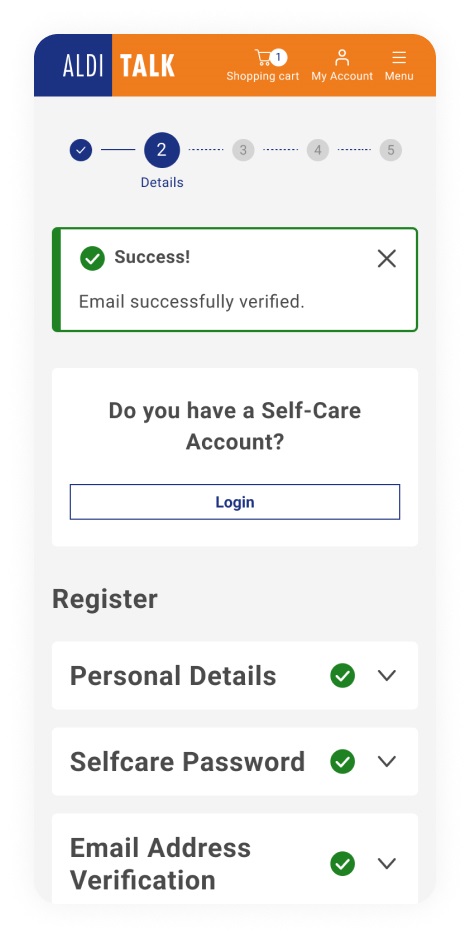
Customers will be able to access the self-care application in both web and mobile app form, allowing them to make purchases, activate their SIM, and manage their tariff plans and add-on’s. Additionally, they will be able to modify their profile and manage their account details, as well as request roaming updates, port in/out, SIM swap, and cancel contract.
SELF-CARE
Customers will be able to access the self-care application in both web and mobile app form, allowing them to make purchases, activate their SIM, and manage their tariff plans and add-on’s. Additionally, they will be able to modify their profile and manage their account details, as well as request roaming updates, port in/out, SIM swap, and cancel contract.
SELF-CARE
Customers will be able to access the self-care application in both web and mobile app form, allowing them to make purchases, activate their SIM, and manage their tariff plans and add-on’s. Additionally, they will be able to modify their profile and manage their account details, as well as request roaming updates, port in/out, SIM swap, and cancel contract.

Way of Working

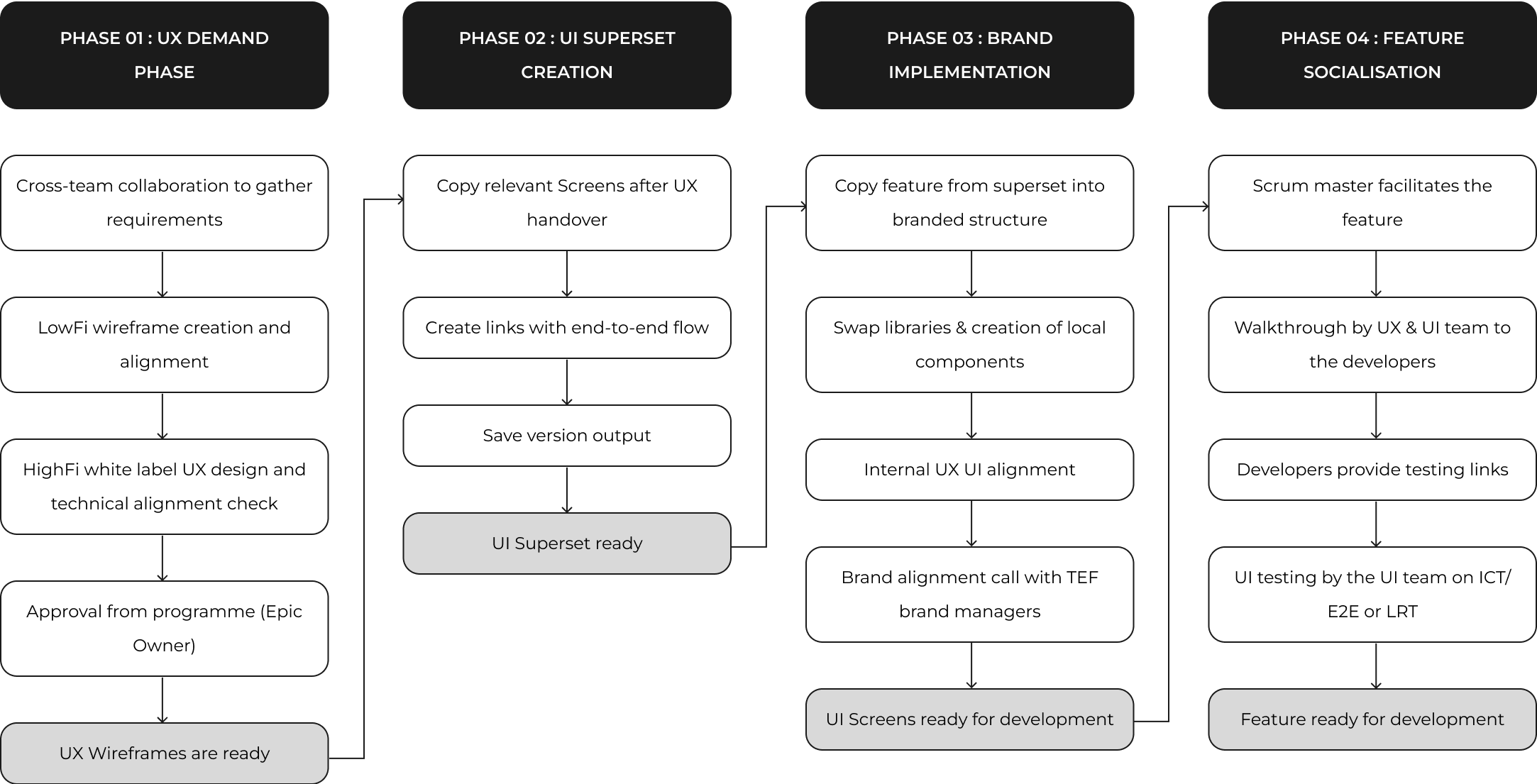
1. UX REQUIREMENT GATHERING
The requirement is initially provided as a feature by the Telefonica business team to the Epic/Product owners. It is then reviewed during a working session with the entire team, which typically includes Business Analysts, Solution Architects, Developers, Legal, and Design teams. This session focuses on evaluating the feature's implications, functionality, and handover timeline.
2. USER FLOW - INITIAL DRAFT
After gathering requirements from the team, an initial draft of the user flow is created. The design is tailored to meet channel and brand specifications while ensuring alignment with the SCS and MFE team.
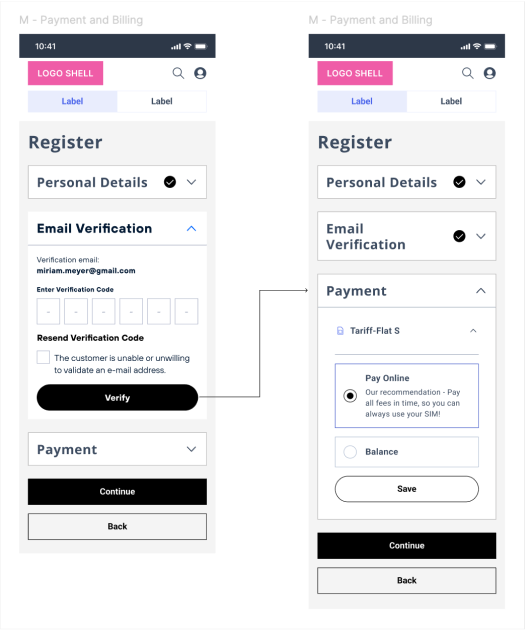
3. FINAL UX WIREFRAMES
The user flow undergoes continuous refinement based on feedback from internal and external reviews. The final wireframes are developed in accordance with Telefonica's design guidelines and seamlessly aligned with the design system.
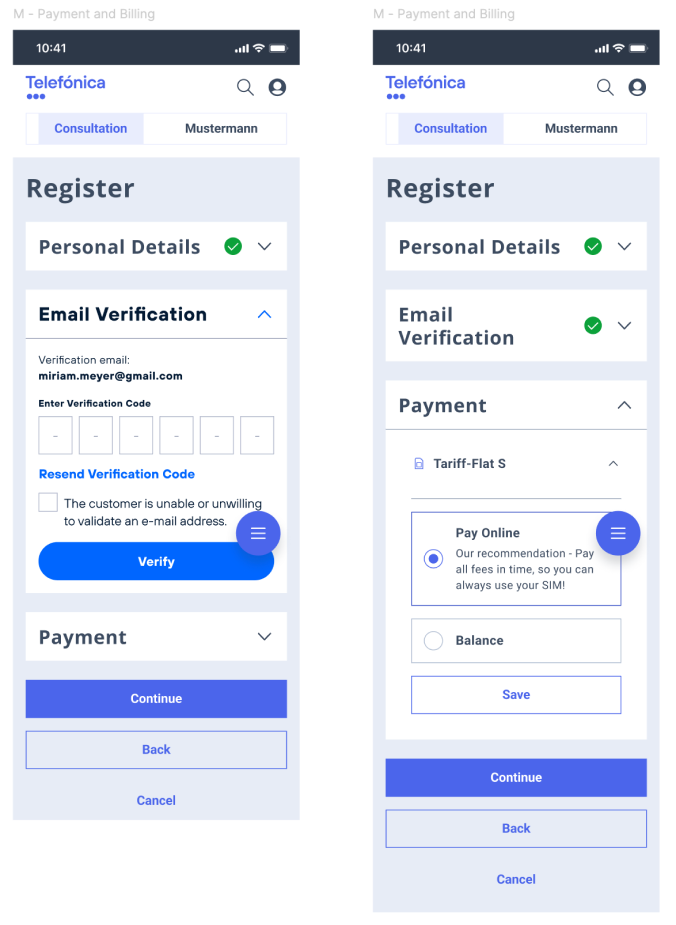
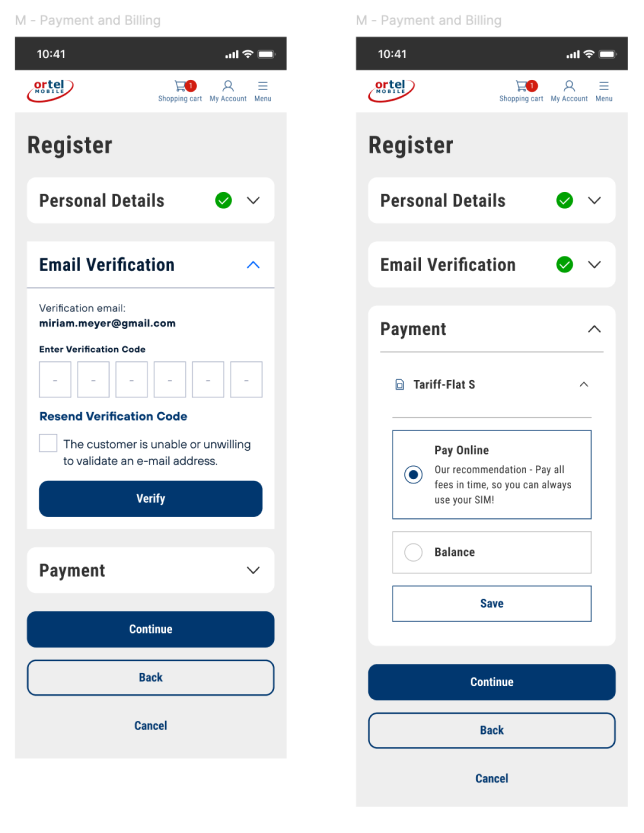
4. BRANDED UI SCREENS
Upon receiving the UX handover, the screens are adapted and re-skinned using Telefonica's branded UI libraries, customized for specific brands such as O2, Ortel, WhatsApp SIM, NettoKOM, Blau and others.
5. UI TESTING
Following the re-skinning process, the developed UI screens undergo thorough testing to ensure functionality, usability, and design consistency. Any bugs or discrepancies identified during this phase are documented and reported for resolution, ensuring the final deliverables meet quality standards and brand requirements.

Design System

UI Screens

UI Screens

Goal was to build a platform that empowers guest experiences.

KEY LEARNINGS

Embarking on the journey for DEI , I delve into the depths of my experience working as a UX designer, exploring the intricacies of the process, the insights gained, and the lessons learned along the way. My role extended beyond crafting interfaces; it encompassed understanding user behaviours, empathising with their needs, and orchestrating design solutions that resonate deeply. DEI also helped me acknowledge the collaborative nature of the project, involving stakeholders, designers, developers, and now the users. I understood how effective communication and collaboration fostered a shared vision and facilitated the alignment of design goals with business objectives.
There's More to Discover
DEI Global
DEI Global
Ingram Micro
Ingram Micro
Bernard Chandran
Bernard Chandran